Start with a "Water Anchor" — Drink Immediately After Waking
After 6–8 hours of sleep, you wake up dehydrated. Making water the very first thing you consume creates a daily anchor — a non-negotiable habit trigger. Place a large glass of water next to your bed the night before. The goal: 300–500ml before coffee, before checking your phone, before anything else.
This single habit can add 10–15% to your daily intake while requiring almost zero willpower because it's attached to an action you already do (waking up).
Use Smart Reminders, Not Fixed-Timer Alerts
Most water apps send reminders every 2 hours regardless of your actual intake. This is ineffective — you might get a reminder right after drinking 600ml, or get no push when you're 800ml behind at noon.
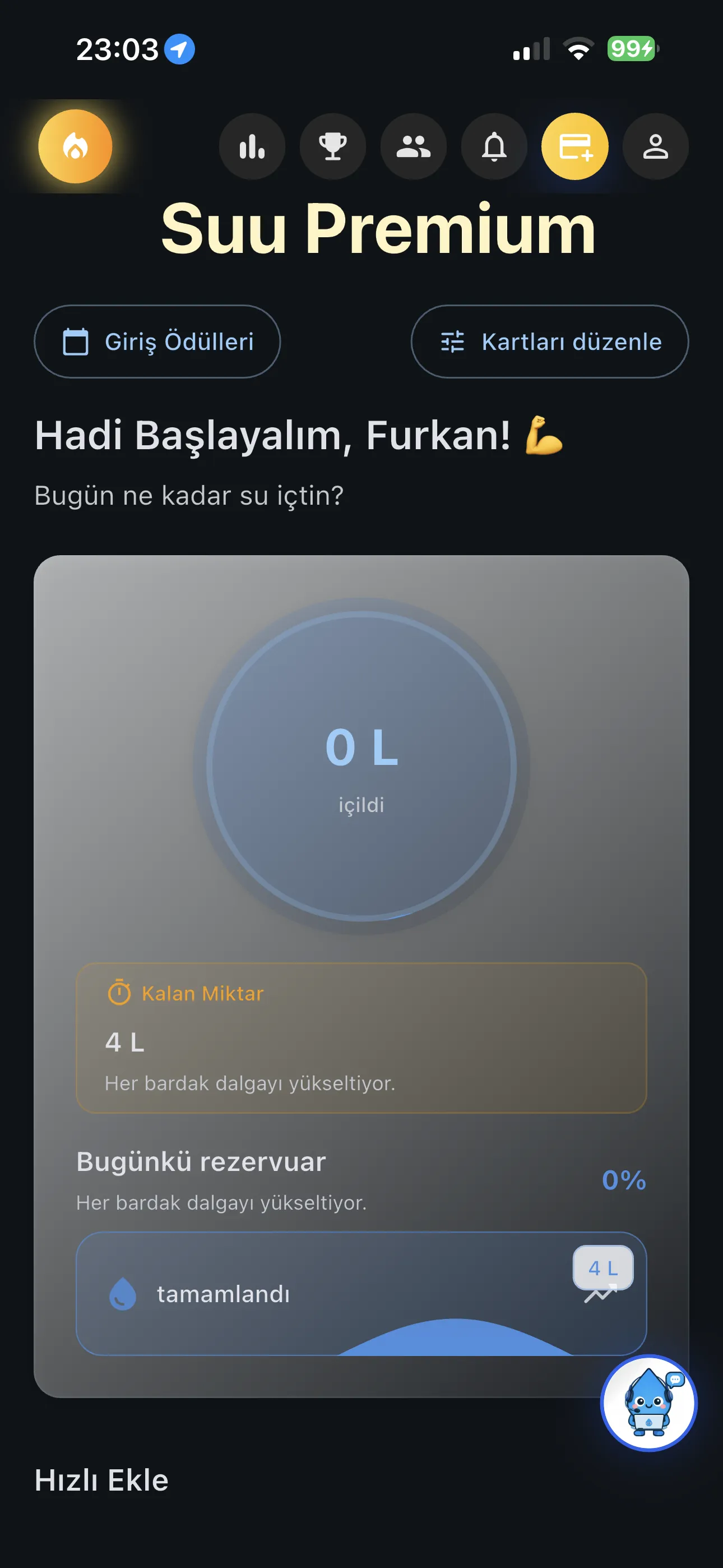
Suu's approach is different: smart, goal-based notifications that fire when you're actually falling behind your personal target. This means reminders are relevant every single time, which dramatically reduces notification fatigue and increases response rates.
Reduce Friction — Log Drinks with One Tap
The harder it is to do something, the less you'll do it. If logging a drink requires opening an app, navigating menus, and scrolling — you'll stop tracking within days. The solution: minimize friction to the absolute minimum.
Suu offers an iOS Lock Screen widget that lets you log water with a single tap — without even unlocking your phone. The iOS Dynamic Island shows your progress at a glance throughout the day. Less friction = more consistent tracking = better habits.
Use Social Accountability — Compete with Friends
Knowing someone else can see your progress is one of the most powerful motivators in human behavior. This is why gym partners, diet buddies, and fitness challenges work so much better than going it alone.
Suu's friend league system lets you compete with friends on daily hydration. You can see how your progress compares to others in real time. This transforms a solo habit into a shared activity — and dramatically increases long-term consistency.
Keep Water Visible — Out of Sight, Out of Mind
If water isn't visible, you won't drink it. Place a water bottle on your desk, kitchen counter, and anywhere else you spend time. The simple act of seeing water triggers the urge to drink — this is environmental design working in your favor.
A 2013 Cornell University study found that people ate 3x as much of whatever food was most visible on their kitchen counter. The same principle applies to water: make it the most visible beverage in your space.
Track Everything — Including Coffee, Tea, and Juice
Many people undercount their hydration because they only count plain water. But coffee, tea, herbal drinks, and even certain foods contribute to your daily intake. The key is tracking them accurately — not all beverages hydrate equally.
Suu has 91 beverages in its database, each with a dehydration factor — a coefficient that adjusts the actual hydration contribution. A 250ml coffee doesn't hydrate the same as 250ml of water. Accurate tracking leads to accurate habits.
Celebrate Small Wins — Build Streaks and Momentum
Hitting your daily water goal is worth celebrating. Streaks — consecutive days of meeting your goal — are one of the most effective ways to sustain long-term habits. The "don't break the chain" effect means each day you succeed makes you more likely to succeed the next day.
Suu tracks your hydration streaks and progress over time, giving you visible evidence of consistency. Even a 3-day streak creates momentum; a 30-day streak creates identity ("I'm someone who stays hydrated").
The Fastest Way to Start
You don't need to implement all 7 strategies at once. Start with just two: the morning anchor (drink 300ml immediately after waking) and downloading Suu to track your intake and get smart reminders. These two changes alone will put most people on track within a week.
Scientific References
- Rodger A, Vezevicius G, Papies EK. (2023). Can a Simple Plan Change a Complex Behavior? Implementation Intentions in the Context of Water Drinking. Appetite, 183, 106459. PubMed: 36646386
- Rodger A, Papies EK, Vezevicius G. (2024). Habitualness, Reward and External Constraints: Exploring the Underlying Influences of Daily Water Intake. Applied Psychology: Health and Well-Being, 16(1). DOI: 10.1111/aphw.12598