Table of Contents
The Chronic Dehydration Problem
Studies consistently show that a significant proportion of adults don't drink enough water on any given day. Unlike acute dehydration — the kind that comes from extreme heat or illness — chronic mild dehydration is a background condition that many people never consciously recognise.
The body is remarkably adaptive. It can function under mild fluid deficit for extended periods, but it does so at a cost: reduced cognitive performance, lower energy, increased susceptibility to headaches, and a range of other subtle symptoms that most people attribute to stress, poor sleep, or simply "having an off day."
Key fact: Research has found that 37% of people mistake thirst for hunger — meaning they eat a snack when their body is actually asking for water. Mild dehydration is one of the most common and easily corrected causes of mid-afternoon energy slumps.
10 Signs You're Dehydrated
Headache
When you're dehydrated, blood volume drops slightly, which can reduce blood flow and oxygen to the brain. The result is a dull, persistent headache — often felt at the front or sides of the head — that many people treat with painkillers when a large glass of water would do the same job. If you reach for ibuprofen regularly, consider whether dehydration is the actual culprit.
Fatigue and Low Energy
Water is essential for nearly every energy-generating process in your cells. Even a modest fluid deficit — as little as 1–2% of body weight — leads to measurably lower physical and mental energy.[1] If you're dragging by mid-morning despite a full night's sleep, dehydration is one of the first things to rule out.
Dark-Coloured Urine
This is the most reliable real-time indicator of hydration status. Pale yellow urine means you're well hydrated. Dark yellow, amber, or brown urine means your kidneys are concentrating fluid because there isn't enough water coming in. Aim for light straw to pale yellow throughout the day.
Dry Mouth and Bad Breath
Saliva is your mouth's natural cleaning and antibacterial system. When you're dehydrated, saliva production drops significantly. Less saliva means bacteria can multiply more freely, causing bad breath — and your mouth will feel dry, sticky, or pasty. If you wake up with terrible morning breath most days, insufficient overnight hydration may be a contributing factor.
Dizziness or Light-Headedness
Dehydration reduces blood volume, which can cause a drop in blood pressure, especially when you stand up quickly (orthostatic hypotension). The result is that brief dizzy spell when you get up from the sofa or stand up from your desk. It's commonly dismissed as "standing up too fast" — but it's often a hydration signal.
Muscle Cramps
Muscles are approximately 75% water. When they're under-hydrated, they become more prone to involuntary contractions — cramps. Electrolyte imbalances (particularly low sodium and potassium) from sweating compound the effect. Night-time leg cramps are often a sign that you haven't drunk enough over the course of the day.
Dry Skin
Skin is the largest organ in the body and depends on adequate hydration to maintain elasticity and plumpness. Chronically dehydrated skin looks dull, feels tight, and shows fine lines more readily. The "skin turgor" test — pinching the back of your hand and seeing how quickly it snaps back — is a rough guide: slow snap-back can indicate dehydration.
Difficulty Concentrating
The brain is approximately 73% water. Research from the University of Connecticut found that mild dehydration (as little as 1.36% fluid loss) caused measurable impairments in concentration, working memory, and mood — particularly in women. If your focus keeps slipping at work, try drinking a full glass of water before reaching for a second coffee.
Feeling Hungry When You've Recently Eaten
The hypothalamus — the part of the brain that regulates both hunger and thirst — can confuse thirst signals with hunger signals. Studies estimate that up to 37% of people mistake thirst for hunger. Before reaching for a snack, especially in the afternoon, drink 250–300 ml of water and wait 15 minutes. The "hunger" often disappears.
Reduced Urination
Most healthy adults urinate 6–8 times per day. If you're going significantly less often — or your urine output feels very small each time — your body is conserving water because it isn't getting enough input. Reduced urination is a clear signal to increase your fluid intake.
The Urine Colour Guide
Urine colour is the simplest, most accessible, and most reliable way to check your hydration status in real time. No device needed — just a quick glance.
Note: certain foods (beetroot, rhubarb) and medications (B-vitamins, some antibiotics) can temporarily alter urine colour regardless of hydration. If your colour is persistently dark despite good fluid intake, consult a doctor.
Dehydration Severity Levels
Understanding how much fluid loss is behind each set of symptoms helps put the numbers in context. Dehydration is measured as a percentage of total body weight lost through fluid.
The 2% threshold is particularly significant because it's easily reachable on a warm day or during a moderate workout without any conscious awareness. A 75 kg person only needs to lose 1.5 kg (through sweat and breathing) to cross that line.
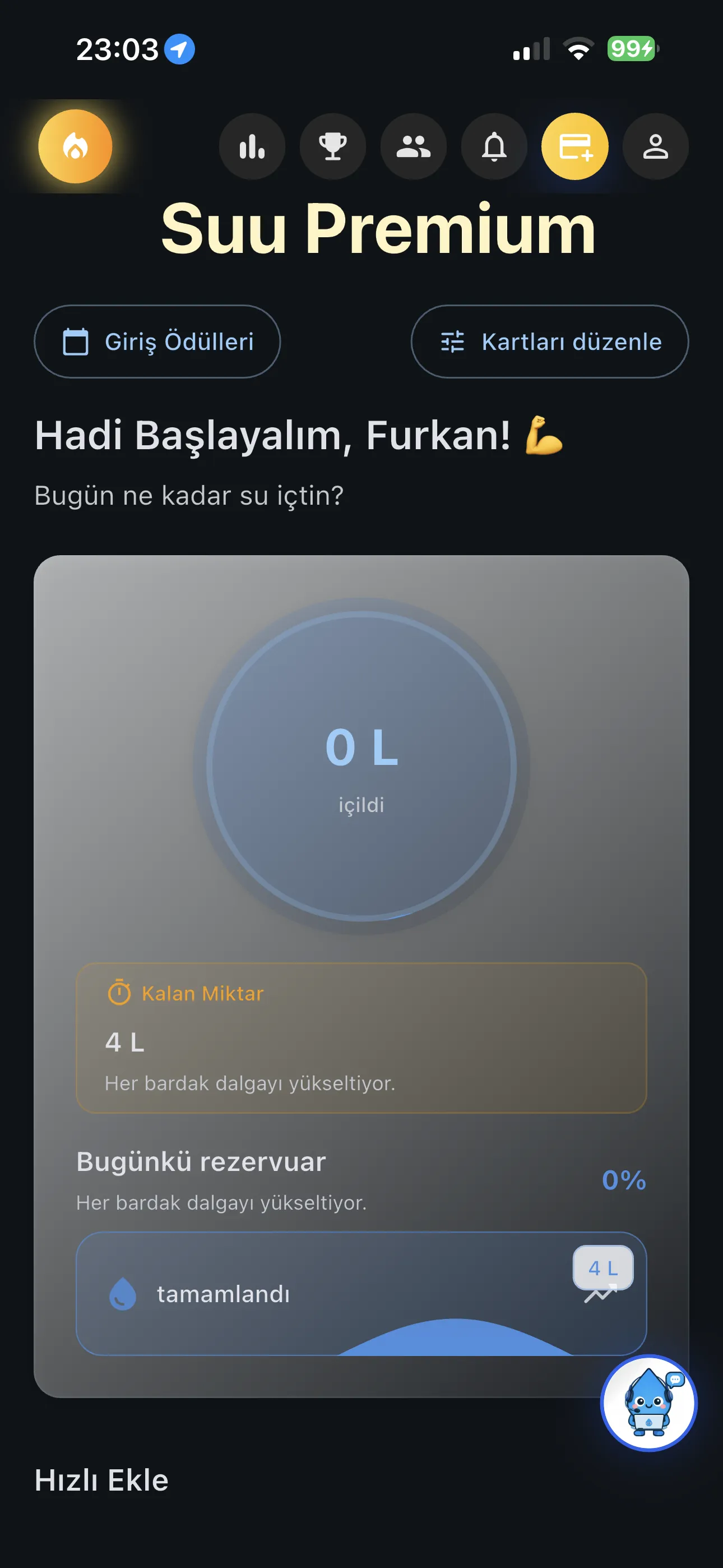
Suu Hydration Score: Know Before Symptoms Appear
Reacting to symptoms is better than ignoring them — but preventing them is better still. Suu's Hydration Score (0–100) gives you a real-time view of your hydration status throughout the day, calculated from your logged fluid intake relative to your personalised daily goal.
Instead of waiting for a headache to remind you to drink, you can glance at your Suu score and see that you're at 45 out of 100 at 2 pm — and act before you feel the effects. The score accounts for your weight, activity level, and the actual hydration contribution of every beverage you log, including coffee, tea, and juices tracked with their dehydration factor.
- Real-time Hydration Score (0–100) — always know where you stand throughout the day
- Goal-based smart reminders — notified when your score is dropping, not just on a fixed timer
- 91 beverages with dehydration factor — your score reflects what you actually drank, not just water volume
- Daily, weekly, and monthly trends — see patterns in your hydration and make lasting changes
- Personalised goals — based on your weight, activity level, and climate
Scientific References
- Ganio MS, et al. (2011). Mild Dehydration Impairs Cognitive Performance and Mood of Men. British Journal of Nutrition, 106(10), 1535–1543. PubMed: 21736786
- Sawka MN, et al. (2007). American College of Sports Medicine Position Stand: Exercise and Fluid Replacement. Medicine & Science in Sports & Exercise, 39(2), 377–390. PubMed: 17277604
- Shirreffs SM, et al. (2004). The Effects of Fluid Restriction on Hydration Status and Subjective Feelings in Man. British Journal of Nutrition, 91, 951–958. PubMed: 15182398